.avif)


.jpg)

.jpg)

.avif)




By 2026, Canton Network is no longer experimental infrastructure. It is already used by major financial players. The question is no longer if it matters, but how retail users can access it.
By early 2026, Canton Network had stopped looking like a new blockchain and started looking like financial infrastructure. Broadridge, DTCC, and J.P. Morgan were already building on it. The more interesting question was what that meant for everyone else.
Canton Network is a public blockchain built for financial activity that requires privacy, control, and interoperability simultaneously. Applications on the network can define their own visibility and access rules while still sharing common infrastructure. That is a very different model from fully transparent chains, and it helps explain why institutions were willing to use it for real workflows.
This is not a story built on pilot decks alone. In its October 2025 ecosystem guide, Canton said applications on the network already process more than $8 trillion in on-chain assets. Broadridge's DLR platform also handles more than $350 billion in average daily U.S. Treasury repo trades on Canton. DTCC and Digital Asset are working toward a first-half-2026 MVP for tokenized DTC-custodied U.S. Treasury securities on the network, while J.P. Morgan has announced plans for a phased 2026 rollout of its deposit token natively on Canton.
As of April 12, 2026, the Lighthouse explorer showed more than 250 million cumulative transactions, over 1,000 validators, and recent daily transaction counts ranging from about 1.7 million to 2.5 million per day.
The important point for retail is simple: the rails are already serious. You are not stepping into an ecosystem that still needs to invent credibility from scratch.
To date, retail access to Canton has been more limited than on consumer-heavy crypto networks. That is starting to change.
Unlike many networks that start with consumer adoption and hope institutional relevance follows, Canton developed in the opposite direction. It first proved itself in demanding institutional workflows, then began opening those same rails to broader retail and developer audiences.
For retail users, the opportunity is not just proximity to big institutional names. It is access to a network where the underlying standards, privacy model, and transaction flows were built for real financial activity first. That can make a difference in how assets behave, how transactions are seen, and how much trust a new product has to earn before a user is willing to hold value there.
It also means Canton is becoming interesting at a time when the consumer layer is still early. That is usually when a network is easiest to understand. The core products are visible. The value proposition is clearer. You can see how the pieces fit together before the experience gets wrapped in extra layers of abstraction.
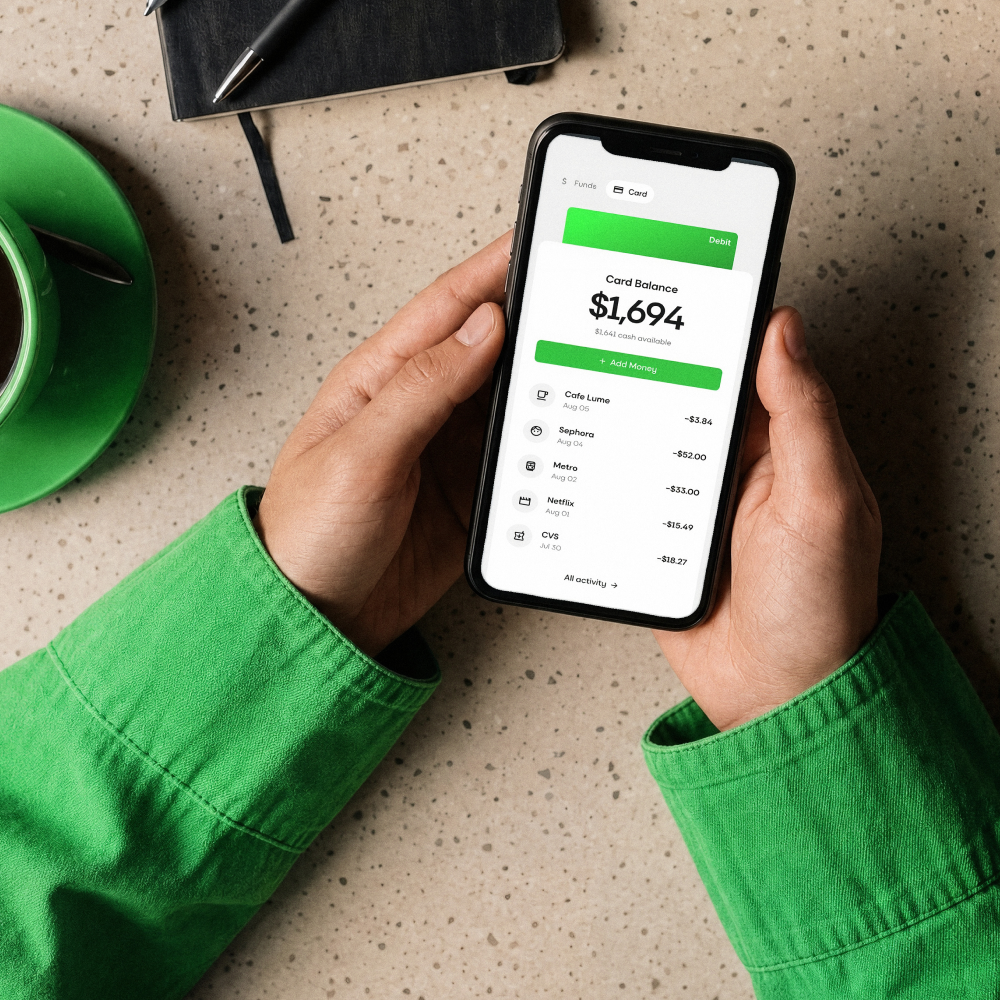
Send is a retail-focused entry point into Canton today. Through Canton Wallet on Send and Pool Party, users with access can bridge USDC from Ethereum into USDCx on Canton, hold CUSD, swap between CUSD, CC, and USDCx, add liquidity, and participate in CC reward programs when available.
That matters because retail adoption usually fails on friction long before it fails on narrative. Send reduces that friction in a few practical ways. A Sendtag gives users a readable identity instead of forcing them to rely on a long wallet address. Passkey-based access removes the usual seed-phrase anxiety from the normal login flow. And the core actions that matter most, funding, holding, swapping, and providing liquidity, are brought into one product experience instead of being scattered across separate tools.
CUSD is Send's stablecoin on Canton, but the bigger point is the environment it runs in. On Canton, transaction details are shared on a need to know basis, rather than broadly broadcast to uninvolved parties. Only the parties involved in a transaction, along with designated compliance monitors when needed, can see the relevant details.
For a retail user, that changes the emotional texture of using the network. Your activity does not need to feel like a public feed. Your balance history is not something every observer can map out by default. The privacy is structural. It comes from how the network works, not from an add-on layered over a transparent base.
Pool Party is Send's trading and liquidity layer on Canton. It lets users move between CUSD, CC, and USDCx or add liquidity inside the same broader product flow.
That does not just mean more things to click. It means a cleaner path through a small set of core assets on a network designed for selective visibility, consistent asset behavior, and tighter settlement flows. For retail users, the practical win is that the experience can feel less brittle. Fewer awkward handoffs. Fewer moments where you wonder whether the second half of a transaction is going to settle the way you expected.
Canton is still best known for institutional adoption, and that is exactly why the retail moment is interesting now. The network already has real participants, real transaction volume, and real financial use cases. What is still developing is the consumer layer that makes those rails usable for everyday users.
That is the window Send is trying to open. Not by pretending Canton is a mass-market chain already, but by giving retail users a practical way to get onto the network and understand what makes it different.
If you want to explore Canton from the retail side, check access at send.cantonwallet.com.


We’re building a space where ideas move faster, creativity feels effortless, and every message matters. Your support and feedback help shape the future of how we connect, share, and create—together.


